The Quiet Web
There is a version of the web that asks nothing of you. No autoplay, no drawer sliding up from the bottom of the screen, no second cookie banner waiting behind the first one. It is the same page you meant to open, with everything else taken out.
Saving an article used to mean keeping a tab open until the laptop restarted. But the tab was never the article. It was a promise to read it later, and a browser is a bad place to keep promises.
Keep the page, not the tab
A saved page is a copy. It does not go down with the site, it does not change under you, and it does not need a signal to open. That is the whole trick, and it is older than the feed.
The best reading tool is the one you stop noticing by the second paragraph.
- Save the link, get the article
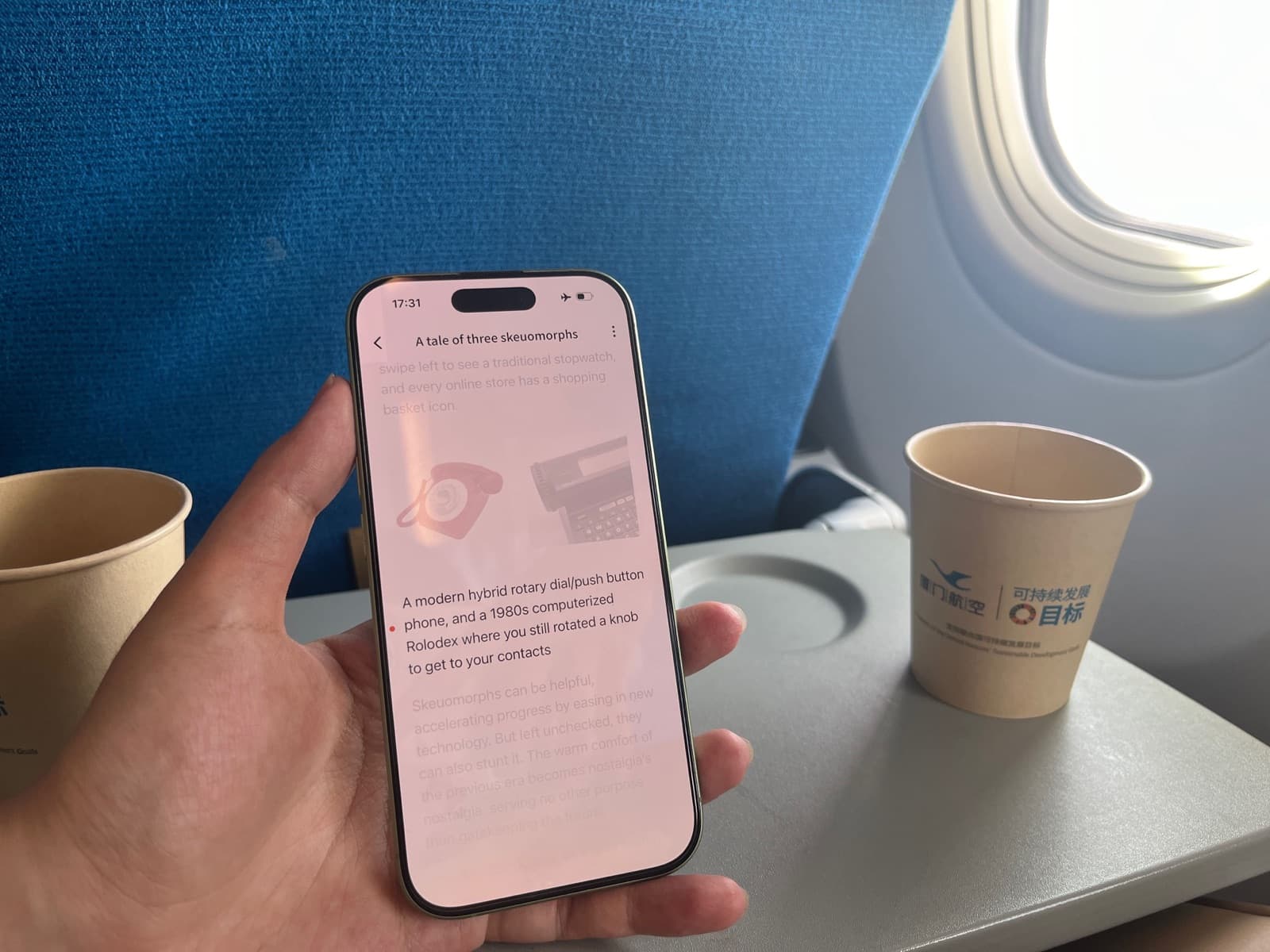
- Read it on the ferry home, offline
- Keep a copy that outlives the URL
None of this is nostalgia. The quiet web is not a place you go back to. It is a way of holding on to what you found, so the reading stays yours and the queue stops feeling like a debt.
Reading is not consuming
The vocabulary gave it away years ago. We consume content, we process a feed, we clear an inbox. All of it borrowed from work, none of it from reading, which is slower and less measurable and much better company.
What you get instead is a shelf. You put things on it when you find them and you take them down when you have the time, and the two events do not need to happen on the same day, or in the same week, or on the same continent.
Designing for Offline First
Offline first is not a fallback mode. It is the assumption you start from: the data is already on the device, and the network is there to make it fresher, not to make it exist.

Once you accept that, most of the hard questions turn into ordinary ones. What do you show while a request is in flight? Nothing new. The page was already there.
Read local, reconcile later
Every read path starts at the store on disk. The network call still happens, but it is a revision check, and it is allowed to lose a race it was never running in.
// Paint from disk, sync after.
async function open(id) {
  const local = await db.get(id);
  if (local) render(local);

  const fresh = await sync
    .pull(id)
    .catch(() => null);

  if (fresh) render(fresh);
}
Written down as a table, the whole philosophy fits in nine cells. The left column is what most apps still do.
| Online first | Offline first |
|---|
| Open | Fetch, then render | Render, then fetch |
|---|
| Save | Wait for 200 | Write, then queue |
|---|
| No signal | Error state | No change |
|---|
A local read should never wait on a remote write.
The cost is real. You take on conflict resolution, storage limits, and a migration path for every schema you ship. What you buy is an app that opens in a tunnel, on a plane, in the long stretch of track where the signal drops.
The queue is the product
Nobody opens a reading app to watch it load. They open it because they put something there earlier and they have ten minutes now. Every design decision downstream of that is about honouring the earlier version of the reader.
Which means the list has to be there before the network is. Everything else, the freshness, the counts, the tidy sync badge, can arrive late without anyone minding.



 Notion、
 Obsidian、
 Google Drive、
 OneDrive、
 Dropbox、
 GitHub。